



Next-Gen Automotive Outlook: The Complete Guide to Upcoming Future Electric Vehicles and Market Predictions
The automotive landscape is undergoing a monumental transformation. As solid-state battery tech matures, 800-volt charging infrastructure expands nationwide, and next-generation software architecture takes center stage, major auto manufacturers are rolling out their most advanced, highly anticipated zero-emission lineups yet.
Whether you are seeking high-efficiency daily commuters, luxury auto insurance coverage for high-horsepower electric supercars, commercial fleet management upgrades, or competitive auto loan rates for your next purchase, knowing what is on the horizon is critical for making informed automotive investments.
Below is an expert breakdown of every key future electric vehicle entering the market—from near-term production releases to radical concept models currently shaping the future of global mobility.
Executive & Luxury Electric Sedans
BMW i3 & iM3 (Expected: Late 2026 – 2027)
BMW is revolutionizing its core compact executive lineup with the upcoming all-electric BMW i3, built on the purpose-engineered Neue Klasse platform. Utilizing an ultra-advanced 800-volt architecture, the new platform enables up to 400-kW DC fast-charging capable of restoring hundreds of miles of range in minutes.
Performance & Specs: The entry-level 50 xDrive trim features a massive 109-kWh battery pack pushing 463 horsepower and an estimated 440 miles of total driving range. Inside, a full-width pillar-to-pillar Head-Up Display replaces traditional gauge clusters.
The Track-Ready iM3 Variant: Arriving shortly after the standard sedan, the performance-focused BMW iM3 will feature a quad-motor powertrain delivering well over 600 horsepower. BMW engineers have integrated software-driven faux gearshifts and synthetic acoustic profiles sampling classic high-revving V8 and V10 exhaust notes to retain pure enthusiast engagement.
Alfa Romeo Giulia EV (Expected: 2028)
Alfa Romeo is transitioning its flagship sports sedan to electric power via the Stellantis STLA Large platform. The Italian marque plans a stepped performance matrix: base models producing approximately 350 horsepower, mid-tier Veloce models generating 800 horsepower, and a range-topping Quadrifoglio trim outputting over 1,000 horsepower. Expect 800-volt ultra-rapid charging and up to 500 miles of estimated driving range.
Mercedes-Benz C-Class EV & E-Class EV (Expected: 2027 – 2028)
Built on the brand’s scalable MB.EA platform, the upcoming Mercedes-Benz C-Class EV will directly challenge competitors in the executive luxury segment. Featuring an illuminated front grille setup and drag-reducing aerodynamic contours, initial dual-motor variants will deliver 482 horsepower and a 0–60 mph sprint time of just 3.9 seconds. Supported by a 94-kWh battery, it targets an estimated 350-mile range. An executive-tier E-Class EV will follow closely to replace the outgoing EQE sedan.
Lexus ES EV (Expected: 2026)
Lexus is expanding its midsize sedan presence by introducing all-electric variants of the popular ES. Buyers can choose between the front-wheel-drive ES350e (221 hp, 300-mile estimated range) and the all-wheel-drive ES500e (338 hp, 0–60 mph in 5.9 seconds). Designed to compete with midsize luxury EVs, the new model bridges comfort with Lexus’s traditional build quality and reliability standards.
High-Performance Sports Cars & Supercars
Porsche 718 Cayman & Boxster EVs (Expected: 2027)
Porsche’s iconic mid-engine sports car family is making the leap to pure electric propulsion using the Volkswagen Group’s Premium Platform Electric (PPE) framework. Utilizing a 900-volt architecture derived from Porsche’s GT4 ePerformance test bed, base single-motor rear-wheel-drive variants are projected to output a minimum of 450 horsepower, while flagship dual-motor all-wheel-drive models will push past 1,000 horsepower.
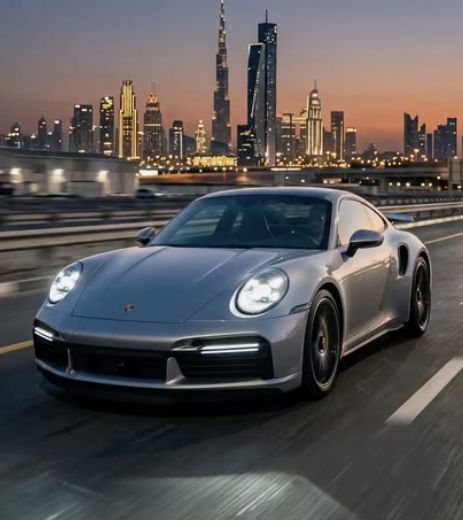
Ferrari Luce (Expected: 2026)
Ferrari’s first fully electric model—codenamed the Ferrari Luce—is set to redefine hyper-EV dynamics. Pushing roughly 1,000 horsepower through a quad-motor all-wheel-drive system, the Luce is engineered to rocket from 0 to 62 mph in a staggering 2.5 seconds, reaching a top speed of 193 mph.
Tech Highlights: Features a 122-kWh battery pack supporting 350-kW fast charging on an 800-volt architecture. Its interior architecture, crafted in collaboration with former Apple design chief Jony Ive, focuses on high-touch minimalist luxury.
Tesla Roadster (Expected: 2027)
Tesla’s second-generation Roadster continues to push the boundaries of hypercar engineering claims. CEO Elon Musk has teased a collaborative effort with SpaceX that could incorporate cold-gas thrusters to achieve sub-one-second 0–60 mph acceleration times. The baseline engineering target includes a massive 200-kWh battery pack capable of delivering over 600 miles of highway range.
Lexus LFA Electric Successor (Expected: 2029)
Lexus is developing a spiritual successor to the legendary V10 LFA supercar. Previewed as a low-slung, ultra-aerodynamic coupe, this high-performance vehicle targets a 0–60 time in the low two-second range, powered by next-generation solid-state battery technology capable of achieving over 430 miles of range with minimal thermal degradation.
Caterham Project V & Longbow Roadster (Expected: 2026 – 2027)
British lightweight engineering is making a major statement in the zero-emission space:
Caterham Project V: Features a lightweight aluminum/carbon chassis, a rear-mounted 268-hp Yamaha motor, a split battery layout (27 kWh split between center console and rear axle), and a sub-4.5 second 0–62 mph time at a target price around $135,000.
Longbow Roadster & Speedster: Developed by former Lucid and BYD engineers, these ultra-light sports cars weigh as little as 1,973 lbs. A rear-mounted 321-hp motor delivers sub-four-second 0–60 mph acceleration with roughly 230 miles of range.
Luxury & High-Performance Electric SUVs
Porsche Cayenne EV (Expected: Summer 2026)
Following the successful launch of the Macan EV, Porsche is electrifying its flagship SUV. The new Cayenne EV will debut in two primary configurations:
Base Model: Generates a robust 435 horsepower for effortless daily driving.
Cayenne Turbo EV: Outputs a massive 1,139 horsepower, making it the most powerful production Porsche to date, sprinting from 0 to 60 mph in just 2.4 seconds.
Supported by a 108-kWh battery pack on an 800-volt architecture, the Cayenne EV accepts peak charging rates of up to 400 kW, charging from 10% to 80% in under 16 minutes with an estimated maximum range of 320 miles.
| Model | Peak Horsepower | 0–60 mph (sec) | Architecture | Max DC Fast-Charge Rate |
| :— | :— | :— | :— | :— |
| Porsche Cayenne Turbo EV | 1,139 hp | 2.4 sec | 800V | 400 kW |
| Ferrari Luce | 1,000 hp | 2.5 sec | 800V | 350 kW |
| BMW iM3 | 600+ hp | 3.0 sec | 800V | 400 kW |
| Mercedes-AMG GT XX | 1,341 hp | < 2.5 sec | 800V | 850 kW |
Mercedes-Benz GLC EV & GLB EV (Expected: Late 2026)
Mercedes-Benz is replacing its first-generation EQ-badged crossovers with dedicated, ground-up platforms:
GLC EV: Rides on an all-new long-wheelbase platform featuring an optional 39.1-inch dashboard display screen. Available in either a 369-hp single-motor or a 483-hp dual-motor all-wheel-drive configuration, its 94-kWh battery provides up to 375 miles of estimated range.
GLB EV: Replaces the former EQB with a boxy, space-efficient crossover available in single-motor (268 hp) and dual-motor (349 hp) layouts, offering up to 333 miles of range.
BMW iX3, iX4, and iX5 (Expected: 2026 – 2027)
BMW’s core SUV family is undergoing a systematic conversion to pure electric and flexible multi-energy platforms:
BMW iX3: Debuts the iconic slim “kidney” grille and a full-width 43-inch windshield display. Features 463 horsepower, 0–62 mph in 4.9 seconds, and nearly 400 miles of range from a 109-kWh battery.
BMW iX4 & iX5: The iX4 coupe-SUV will feature M-performance variants starting in 2027. Meanwhile, the midsize iX5 will utilize an upgraded version of the CLAR architecture, allowing traditional gas models, pure battery-electric powertrains, and co-developed Toyota hydrogen fuel-cell (FCEV) setups to share the same assembly lines.
Mercedes-AMG EV SUV & GT XX (Expected: 2026 – 2027)
AMG is building standalone performance vehicles on its proprietary AMG.EA platform. Utilizing ultra-dense axial-flux electric motors, the low-slung AMG GT XX sedan concept produces 1,341 horsepower, reaching a top speed of 223 mph. Its specialized battery architecture is designed to accept experimental charging rates of up to 850 kW, adding 248 miles of range in just five minutes. A taller AMG EV SUV using the same high-output axial-flux architecture will follow in 2027.
Rolls-Royce Electric SUV (Expected: 2028)
Following the successful launch of the Spectre coupe, Rolls-Royce is preparing a full-size ultra-luxury electric SUV. Expected to sit alongside or eventually succeed the Cullinan, this whisper-quiet vehicle will pair handcrafted coachbuilding luxury with high-torque dual-motor propulsion.
Mass-Market, Mid-Size & Compact Crossovers
Rivian R2, R3, and R3X (Expected: 2026 – 2027)
Rivian is drastically lowering the barrier to entry for adventurous EV buyers with its new mid-size and compact platforms:
Rivian R2: Starting around $45,000, this five-seat crossover features single-motor RWD, dual-motor AWD, and tri-motor AWD setups capable of 0–60 mph in under 3.0 seconds with over 300 miles of range.
Rivian R3 & R3X: Built on a platform with a five-inch shorter wheelbase than the R2, these subcompact hatch-crossovers will start under $40,000. The rally-inspired R3X will showcase wider tracks, higher ground clearance, and a high-output tri-motor system.
[Rivian Lineup Scaling]
R1T / R1S (Full-Size Flagship) ──► R2 (Mid-Size Crossover $45k) ──► R3 / R3X (Compact Hatch $35k-$40k)
Lucid Cosmos, Earth, and Off-Road SUV (Expected: 2027 – 2028)
Lucid Motors is expanding well beyond the executive Air sedan and flagship Gravity SUV by debuting three mid-size crossovers powered by its lightweight Atlas drive unit:
Lucid Cosmos: A sleek, aerodynamic mid-size crossover featuring a 36-inch dashboard display and physical climate controls, with a target starting price under $50,000.
Lucid Earth: Arriving in late 2027, the Earth features a traditional, upright roofline for maximum interior cargo volume.
Lucid Off-Road SUV: Launching in 2028, this variant will incorporate higher ground clearance, skid plates, all-terrain tires, and rugged exterior body cladding for light off-road exploration.
Toyota Highlander EV & Subaru Getaway (Expected: Late 2026)
Toyota and Subaru continue their joint engineering collaboration with new three-row family crossovers:
Toyota Highlander EV: Transitions from gas/hybrid setups to a pure electric three-row family vehicle. Base FWD models offer 221 horsepower and 287 miles of range, while AWD dual-motor models deliver 338 horsepower and 320 miles of range.
Subaru Getaway: Subaru’s twin to the Highlander EV features standard dual-motor all-wheel drive generating 420 horsepower, a 96-kWh battery pack providing over 300 miles of range, and ruggedized Subaru styling cues.
Volvo EX60 (Expected: Summer 2026)
The Volvo EX60 debuts on the automaker’s next-generation SPA3 platform, featuring structural battery packs with high energy density. Range estimates reach up to 400 miles, with powertrains ranging from a 369-hp rear-wheel-drive base trim to a high-output 670-hp P12 flagship capable of 0–60 mph in 3.8 seconds.
Kia EV3 (Expected: Late 2026)
Kia is scaling down its award-winning EV design language into the compact Kia EV3. Expected to start near $35,000, the crossover offers two battery options: a standard 58-kWh pack (220 miles of range) and an 81-kWh long-range pack (320 miles of range). Performance choices range from single-motor FWD up to a 288-hp GT trim.
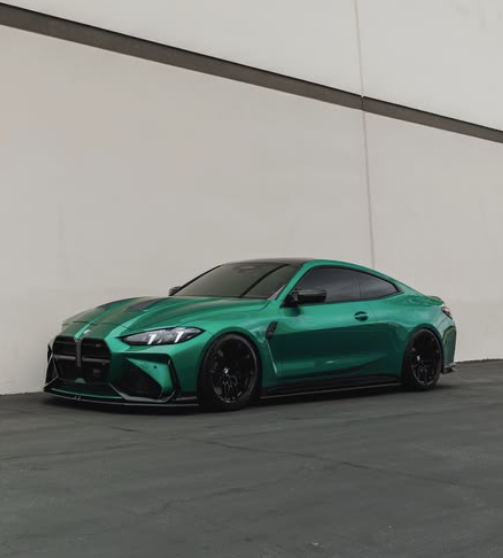
Genesis GV60 Magma & GV90 (Expected: 2026)
Genesis is pushing both ends of the luxury spectrum:
GV60 Magma: Launching the brand’s high-performance Magma sub-brand, this tuned crossover delivers up to 641 horsepower and 583 lb-ft of torque in 15-second boost modes, paired with adaptive dampers and track-ready brakes.
GV90: The brand’s flagship three-row luxury SUV, previewed by the opulent Neolun concept featuring coach doors, heated swiveling front seats, and luxury interior trim.
Rugged Off-Roaders, Electric Pickups & Utility Vans
Scout Traveler SUV & Scout Terra Pickup (Expected: 2028 – 2030)
Backed by Volkswagen Group, the iconic Scout nameplate returns as a rugged, American-built EV brand constructed on a heavy-duty body-on-frame platform with mechanical locking differentials and a solid rear axle.
Capability Specs: The dual-motor AWD powertrain targets 350 miles of pure-electric range. Scout will also offer a gas-powered range-extender generator option that boosts total driving distance to 500 miles.
Utility Ratings: The Scout Terra pickup features a 5.5-foot bed and a maximum towing capacity exceeding 10,000 lbs. Starting prices for both models are targeted under $60,000.
Slate Truck (Expected: Late 2026)
Slate is introducing an ultra-minimalist, back-to-basics electric pickup truck aimed at fleet managers and budget-conscious buyers. To keep prices in the mid-$20,000 range without relying on fluctuating federal tax credits, the Slate Truck omits traditional infotainment screens and factory stereo systems in favor of personal smartphone integration mounts. It offers 150-mile or 240-mile battery options driven by a 201-hp rear motor.
Ford Mid-Size Universal EV Truck (Expected: 2027)
Ford is developing a affordable mid-size electric pickup built on its new Universal EV platform. Featuring a footprint similar to the compact Maverick but interior volume comparable to a RAV4, the truck utilizes cost-effective Lithium Iron Phosphate (LFP) batteries and a 400-volt architecture to target a starting price near $30,000.
Kia Electric Pickup Truck (Expected: 2029)
Following the global reveal of the mid-size Tasman, Kia has confirmed an all-electric truck specifically engineered for North America. Riding on a dedicated commercial EV platform, it promises heavy-duty towing capacity and class-leading interior passenger and cargo space.
Mercedes-Benz VLE Luxury Van & Hyundai/GM Commercial Van (Expected: 2027 – 2028)
Mercedes-Benz VLE: An executive passenger van featuring 800-volt fast-charging, optional rear executive thrones with built-in massage functions, a refrigerated center console, and a drop-down 31.3-inch 8K ceiling entertainment screen.
Hyundai & GM Commercial Van: A joint-venture electric commercial work van slated for U.S. production starting in 2028, engineered to streamline urban logistics and corporate fleet electrification.
Market Trends & Automotive Ownership Insights
As auto manufacturers finalize these upcoming models, several broader automotive market trends are redefining the total cost of ownership for consumer and commercial buyers alike:
800V & 900V Architecture Dominance: High-voltage platforms are quickly becoming standard across luxury and mid-tier segments, drastically shortening DC fast-charging stops down to 15–20 minutes.
Dynamic Auto Insurance Considerations: High-horsepower hyper-EVs and luxury crossover models featuring complex sensor arrays demand specialized coverage. Vehicle owners should evaluate competitive auto insurance policies that offer specialized battery replacement riders and OEM parts replacement coverage.
Financing & Fleet Investments: With vehicle manufacturers expanding options in the $30,000 to $45,000 price range, securing favorable auto loan terms and analyzing long-term residual value retention will be key for retail buyers and commercial fleet operators alike.
The transition to zero-emission mobility is shifting into high gear across every automotive segment—from utilitarian work trucks and compact daily commuters to track-focused electric supercars.
Stay Ahead of the Automotive Curve
Are you planning your next vehicle purchase or upgrading your business fleet for the electric era? Explore our comprehensive vehicle buyer guides, track updated release schedules, and calculate your estimated total cost of ownership today to make the smartest move for your automotive future!