



The End of the Free-Breathing Era: Why the Next Porsche 911 GT3 Is Embracing Turbocharging
For twenty-five years, the Porsche 911 GT3 has served as the undisputed high-water mark for mechanical purity. Ever since the 996 generation debuted in 1999, the GT3 formula has been delightfully predictable: a high-revving, naturally aspirated flat-six engine mounted over the rear axle, paired with razor-sharp chassis dynamics and a laser focus on track performance. It is an automotive icon built on visceral, unfiltered sensory feedback—specifically the spine-tingling howl of an atmospheric engine screaming past 8,000 RPM.
However, as someone who has spent over a decade working alongside high-performance powertrains, tuning track vehicles, and analyzing industry shifts, I can tell you that the laws of physics are far easier to bend than global environmental mandates. The automotive industry is currently experiencing its most aggressive transition in a century, and even Porsche’s revered Motorsport division in Weissach is not immune.
The writing is on the wall: the legendary naturally aspirated 4.0-liter flat-six that powers the current 992.2 generation is living on borrowed time. With tightening global emissions standards, the upcoming iteration of the Porsche 911 GT3 will almost certainly be forced to adopt forced induction or advanced hybrid performance technology to survive.
The Euro 7 Dilemma: Regulatory Pressure vs. Mechanical Purity

To understand why Porsche is considering such a monumental shift, you have to look beyond track times and examine the regulatory reality facing automotive manufacturers in Europe. The European Union’s impending Euro 7 regulations, combined with strict 2030 greenhouse gas reduction targets—which demand a 55 percent reduction in vehicle emissions compared to 1990 levels—have placed high-displacement, high-revving atmospheric engines directly in the crosshairs.
Andreas Preuninger, the longtime head of Porsche’s GT car line and the custodian of the GT3 ethos, recently acknowledged the mounting pressure facing their iconic 4.0-liter engine. While the atmospheric flat-six might technically satisfy North American emissions thresholds for a few more years, the timeline in Europe is drastically shorter. Without major powertrain overhauls, the current high-revving engine simply cannot clear the regulatory hurdles looming in the EU.
A common question among track enthusiasts and collectors is why Porsche couldn’t simply manufacture two distinct engines: a naturally aspirated version for North America and a compliant, low-emission variant for Europe. From an engineering and business perspective, that strategy is dead on arrival.
Designing, testing, and homologating two entirely separate high-performance powertrains for a low-volume track car demands an astronomical amount of capital. Regulatory compliance testing alone costs tens of millions of dollars per region. For Porsche to maintain profitability and ensure vehicle durability standards, the global 911 GT3 platform must share a unified engine architecture across all major markets. If Europe demands lower tailpipe emissions, the rest of the world will inherit the exact same engineering solution.
What a Turbocharged 911 GT3 Means for the Track
For purists, the word “turbocharged” near a GT3 badge feels like sacrilege. The immediate fear is a loss of throttle response, a diminished exhaust note, and a muted redline. But as someone who has tracked everything from vintage air-cooled cars to modern twin-turbo hypercars, I view this shift as an evolutionary leap rather than a downgrade.
Modern forced induction technology is light-years ahead of where it was even five years ago. If the next GT3 adopts turbocharging, we won’t be dealing with the laggy power delivery of classic boost-driven sports cars. Instead, Porsche’s engineering team will leverage advanced technologies to preserve the GT3’s razor-sharp character:
Variable Turbine Geometry (VTG): By dynamically adjusting the airflow inside the turbocharger housing, VTG delivers immediate low-end torque while maintaining incredible efficiency at higher revs.
Electric Exhaust Gas Turbochargers: Derived directly from Porsche’s endurance racing programs, electrically powered turbochargers can spool instantly via a integrated electric motor before exhaust gases take over, completely eliminating lag.
Anti-Lag Calibration and Lightweight Rotating Assemblies: High-tech internals will allow the engine to hold boost pressure off-throttle, keeping the response instantaneous during aggressive track cornering.
A turbocharged GT3 will offer vastly superior mid-range torque, allowing drivers to rocket out of apexes without needing to be perpetually pinned at the absolute peak of the powerband. Furthermore, forced induction provides custom tuners and performance enthusiasts with significantly higher headroom for power extraction, engine tuning, and track-focused performance upgrades.
Forced Induction vs. Hybridization: Which Path Will Porsche Choose?
While turbocharging is a prime candidate for the next-generation GT3, it is not the only option on the drawing board. Porsche has already demonstrated its prowess with performance hybrid systems in models like the 911 GTS T-HEV and the groundbreaking 918 Spyder hypercar.
This presents Weissach with two distinct engineering routes for the future GT3 platform:
Option 1: Twin-Turbocharged Flat-Six
A pure twin-turbo setup offers a massive jump in horsepower and torque while keeping overall curb weight manageable. The primary challenge here is managing engine bay temperatures during sustained 20-minute track sessions and tuning the exhaust acoustics to match the emotional high-frequency roar that GT3 owners demand.
Option 2: Hybridized Performance Powertrain
Integrating a small, lightweight traction motor alongside a smaller-displacement combustion engine would allow Porsche to use “e-boost” to fill the low-end torque curve. This setup could potentially allow a high-revving engine design to survive longer by letting the electric drive system handle high-load, high-emission driving scenarios. However, the added weight of an onboard battery pack and inverter is a major hurdle for a car whose identity is built on lightweight agility.
Considering the track-focused brief of the GT3 line, a compact, highly optimized turbocharged flat-six remains the most weight-efficient method to achieve massive power increases while meeting strict global emissions limits.
Lineup Realignment: The Ripple Effect Across the GT Family
Transitioning the 911 GT3 to a turbocharged architecture creates a fascinating domino effect across the rest of Porsche’s performance car lineup. For decades, Porsche maintained a strict, logical hierarchy across its GT models:
+——————————————————————————-+
| TRADITIONAL PORSCHE GT HIERARCHY |
+——————————————————————————-+
| GT4 / GT4 RS –> Entry-Level Track Weapon (Naturally Aspirated 4.0L) |
| GT3 / GT3 RS –> Pinnacle Atmospheric Track Car (High-Revving N/A 4.0L) |
| GT2 / GT2 RS –> Brutal, Turbocharged Straight-Line & Track Monster (Turbo) |
+——————————————————————————-+
If the GT3 shifts to forced induction, that distinct line between the GT3 and the legendary GT2 becomes blurred. Historically, the GT2 RS was defined by its massive turbochargers, rear-wheel-drive layout, and terrifying acceleration. If the GT3 goes turbo, the GT2 will likely need to push even further into hypercar territory—potentially adopting wild, multi-motor hybrid setups producing well over 800 horsepower to maintain its crown as the flagship brute of the lineup.
Simultaneously, the future of the mid-engine 718 GT4 remains in flux as the 718 platform transitions toward full electrification and specialized gas-powered variants. The entire Porsche GT ecosystem is being fundamentally restructured for the modern age.
Market Value, Collector Impact, and Used Car Economics
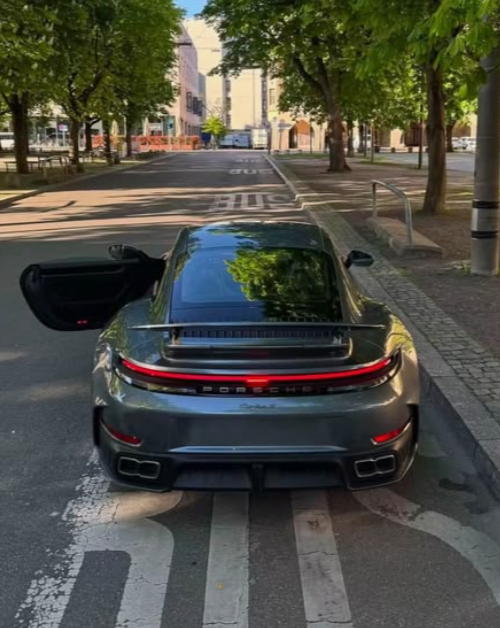
Whenever a legacy manufacturer announces the end of an analog mechanical era, the luxury auto market reacts immediately. We saw it when air-cooled engines died with the 993 generation, and when hydraulic steering was replaced by electric power steering in the 991.1.
The shift away from naturally aspirated GT3 engines will inevitably impact collector car values and auto sales across the secondary market:
Skyrocketing Values for N/A GT3s: Modern classics like the 991.2 GT3 RS, 992.1 GT3, and 991 Speedster will see renewed demand. Collectors and track purists will pay top dollar for low-mileage, atmospheric 4.0-liter models.
Pre-Owned Vehicle Financing Trends: As prices for legacy GT3s appreciate, prospective buyers will increasingly look to specialized auto loans, exotic car leasing, and tailored auto financing options to secure these modern classic investments before prices outpace the market.
Increased Focus on Asset Protection: High-value GT car owners will spend more on specialized car insurance policies, collector car coverage, and professional vehicle maintenance to preserve the resale value of these final-run atmospheric machines.
If you currently own a naturally aspirated 911 GT3, holding onto it may prove to be one of the best automotive decisions you ever make.
The Verdict: Evolution Is Mandatory, Excellence Is Guaranteed
Change is never easy for automotive purists, especially when it threatens a formula as iconic as a naturally aspirated 911 GT3 screaming to 9,000 RPM. But progress is non-negotiable. Environmental regulations are forcing the industry’s hand, and Porsche’s choices are simple: adapt the powertrain or discontinue the model entirely.
If history has taught us anything about the engineers at Weissach, it is that they do not release a new GT car unless it completely outperforms the model it replaces. When Porsche introduced water-cooling, electric power steering, and dual-clutch PDK transmissions, purists protested—until they drove the cars and realized how ridiculously fast and capable they were.
A turbocharged 911 GT3 will undoubtedly sound different, and it will deliver its power differently. But it will also be faster, more efficient, and undeniably dominant on the racetrack. The atmospheric era may be winding down, but the legacy of the GT3 badge is in safe hands.
Ready to Experience Porsche Performance?
Whether you are looking to secure a final-edition naturally aspirated GT3, explore exotic car financing options, or get professional advice on track prep and vehicle optimization, our team of automotive specialists is here to help. Connect with our performance advisors today to discuss inventory, custom builds, and market valuations.