



The Forgotten Titans: 9 Greatest Concept Supercars of the 1990s That Should Have Built an Era
The 1990s represented a golden decade for automotive engineering—a transitional space where raw analog mechanics met the first wave of advanced digital telemetry. It was an era characterized by radical design philosophies, uninhibited multi-cylinder powertrains, and a relentless race to crack the 200 mph threshold. Long before contemporary hypercars relied on complex hybrid architectures or fully electric drivetrains, mid-engine performance was defined by pure displacement, forced induction, and aggressive aerodynamics.
Yet, some of the most ground-breaking high-performance vehicle developments never made it past the showroom turntable. Major automakers used prototype platforms to test structural carbon fiber, active aerodynamics, and experimental engine configurations. While these machines captured the public imagination at global automotive expos, financial realpolitik and corporate restructuring relegated them to private collections and museum vaults.
Looking back with a decade of perspective on supercar architecture and historical collector trends, these nine concept supercars from the 1990s stand out as the ultimate missed opportunities of modern automotive history.
Ford GT90: The Quad-Turbo V12 Blueprint for Modern Performance
Revealed unexpectedly at the 1995 Detroit Auto Show, the Ford GT90 was conceived as a spiritual successor to the legendary GT40 Le Mans winner. Developed in just six months by a secretive engineering team using components harvested from Jaguar—which was under Ford ownership at the time—the GT90 was far more than an aesthetic styling model; it was a functioning high-speed test bed.
[Jaguar XJ220 Monocoque & Manual Box]
│
▼
┌──────────────────────────────────────────────┐
│ FORD GT90 ARCHITECTURE │
│ • Quad-Turbocharged 6.0L DOHC V12 │
│ • Output: 720 hp / 660 lb-ft Torque │
│ • New Edge Carbon-Fiber Bodywork │
└──────────────────────────────────────────────┘
│
▼
[Estimated Metrics: 0-60 in 3.0s | 235+ mph]
Underneath its lightweight carbon-fiber body paneling sat a lengthened aluminium monocoque borrowed from the Jaguar XJ220, alongside its double-wishbone suspension system and five-speed manual transmission. However, Ford bypassed the XJ220’s twin-turbocharged V6 in favor of a bespoke power unit: a quad-turbocharged 6.0-liter V12 assembled using architecture from modular Ford V6 engines.
Engine: 6.0-Liter Quad-Turbo V12
Output: 720 Horsepower / 660 lb-ft Torque
Drivetrain: Rear-Wheel Drive, 5-Speed Manual
Top Speed: Estimated 235+ mph
The engineering team claimed the quad-turbo powerplant produced 720 horsepower, theoretically propelling the vehicle to 60 mph in 3.0 seconds. The exterior debuted Ford’s “New Edge” design language, featuring sharp triangular geometries, a laminated glass canopy, and an active rear spoiler. The exhaust heat was so intense that technicians had to install ceramic heat tiles similar to those on the Space Shuttle to protect the rear bodywork. While production costs killed the project, the GT90 fundamentally altered Ford’s approach to halo car development, laying the groundwork for the 2005 Ford GT.
Bentley Hunaudières: The Underground Origin of the W16 Engine
When Volkswagen Group acquired Bentley, Bugatti, and Lamborghini in 1998, CEO Ferdinand Piëch sought to establish an absolute benchmark for internal combustion capability. Before settling on Bugatti as the flagship vessel for this mission, the engineering trial made its debut under a British crest at the 1999 Geneva Motor Show as the Bentley Hunaudières.
Named after the famous high-speed straight at the Circuit de la Sarthe, the concept utilized a modified mid-engine Lamborghini Diablo chassis wrapped in sculpted green aluminium and carbon bodywork. The headline feature was a naturally aspirated 8.0-liter W16 engine generating 623 horsepower and 561 lb-ft of torque, mated to a classic five-speed gate-shifted manual transmission.
[Volkswagen Group R&D (1998)]
│
┌────────────────┴────────────────┐
▼ ▼
[Bentley Hunaudières (1999)] [Bugatti Veyron Concept]
• Mid-Engine Diablo Chassis • Refined W16 Quad-Turbo
• 8.0L N/A W16 (623 hp) • Production Record Holder
• 5-Speed Manual Gearbox • All-Wheel Drive Platform
The Hunaudières served as a crucial proof-of-concept for multi-bank engine geometry. It demonstrated that two narrow-angle V8 engines sharing a single crankshaft could resolve heat dissipation issues while delivering massive displacement within a compact engine bay. Though Bentley ultimately focused on the Continental GT, the Hunaudières’ mechanical layout became the literal foundation for the Bugatti Veyron.
Volkswagen W12 Syncro & Nardo: The Record-Breaking Testbed
While the Bentley Hunaudières was primarily a styling experiment, the Volkswagen W12 project was a fully engineered motorsport platform. Commissioned by Piëch and designed by Giorgetto Giugiaro at Italdesign, the initial W12 Syncro debuted at the 1997 Tokyo Motor Show featuring a 5.6-liter W12 engine and four-wheel-drive capability.
┌─────────────────────────────────────────────────────────────┐
│ VOLKSWAGEN W12 EVOLUTION │
├───────────────────┬───────────────────┬─────────────────────┤
│ W12 SYNCRO │ W12 ROADSTER │ W12 NARDO │
│ • 1997 Tokyo │ • 1998 Geneva │ • 2001 Debut │
│ • 414 hp / AWD │ • RWD Platform │ • 591 hp / RWD │
└───────────────────┴───────────────────┴─────────────────────┘
The powertrain strategy was brilliant in its scalability. By uniting two 2.8-liter VR6 blocks at a 72-degree angle, Volkswagen created an ultra-compact 12-cylinder powerhouse.
The development curve accelerated rapidly over five years:
W12 Syncro (1997): 414 hp, mid-engine four-wheel-drive layout.
W12 Roadster (1998): Rear-wheel-drive open-top derivative evaluating chassis flex.
W12 Nardo (2001): Engine enlarged to 6.0 liters, producing 591 hp and accelerating 0–62 mph in 3.5 seconds.
In 2002, Volkswagen proved the durability of this architecture by bringing the W12 Nardo to Italy’s Nardò Ring. The vehicle ran continuously for 24 hours, covering 4,809 miles at an average speed of 200.6 mph—breaking 12 world speed endurance records in the process. The engine design went straight into production applications, powering the Bentley Continental GT, Audi A8, Volkswagen Phaeton, and Touareg W12.
Audi Avus Quattro: The Spaceframe and Lightweight Metallurgy Pioneer
Unveiled at the 1991 Tokyo Motor Show, the Audi Avus Quattro stood as a manifesto for lightweight automotive metallurgy. Drawing direct design inspiration from the high-speed Auto Union Streamliners of the 1930s, the Avus was built around the first major iteration of the Audi Space Frame (ASF).
The body shell consisted of hand-shaped, unpainted, highly polished aluminium panels just 1.5 mm thick. Weighing under 2,750 lbs, the Avus was engineered to showcase structural efficiency alongside Audi’s signature quattro all-wheel-drive system.
| Mechanical Attribute | Specifications |
| :— | :— |
| Chassis Construction | Advanced Aluminium Space Frame (ASF) |
| Engine Concept | 6.0-Liter W12 (Show model housed a wooden mockup) |
| Target Power | 509 hp / 398 lb-ft Torque |
| Estimated Metrics | 0-62 mph in 3.0 seconds; 211 mph Top Speed |
| Drivetrain | 6-Speed Manual with Torsen Center Differential |
Because the actual 6.0-liter W12 engine was still in early bench testing, Audi built a precision mock-up out of painted wood and plastic to fill the exposed mid-engine compartment for the auto show floor. Despite the missing powerplant at launch, the structural lessons learned from the Avus allowed Audi to bring the aluminium A8 into mass production shortly after, permanently shifting industry standards around structural weight management.
Lamborghini Calà: The V10 Foundation for the Modern Entry Supercar
Long before the Audi-era Gallardo redefined Lamborghini’s financial trajectory in 2003, the Italian marque sought a entry-level, high-volume model to replace the aging Jalpa. Unveiled at the 1995 Geneva Motor Show, the Lamborghini Calà was a functional prototype created by Italdesign under the leadership of Giorgetto Giugiaro.
The Calà featured a lightweight carbon-fiber monocoque chassis married to an all-aluminium 3.9-liter naturally aspirated V10 engine that delivered 395 horsepower to the rear wheels via a six-speed manual gearbox.
[Jalpa Discontinued (1988)]
│
▼
[Lamborghini Calà Concept (1995)]
• 3.9L N/A V10 (395 hp)
• Italdesign Carbon Monocoque
• Fully Operational Prototype
│
▼
[VW Group Acquisition (1998)]
│
▼
[Lamborghini Gallardo Launched (2003)]
Unlike many conceptual exercises, the Calà was fully drivable and intended for full-scale factory production. The vehicle performed seamlessly in track trials and automotive press testing. However, when ownership switched to Volkswagen Group in 1998, the platform was shelved so engineering teams could start fresh with an all-wheel-drive configuration—which eventually launched as the Gallardo. The Calà remains one of the greatest “what-if” models in exotic car history, proving that Lamborghini’s iconic V10 mid-engine format was ready years before its commercial debut.
Mercedes-Benz C112: Active Aerodynamics and Telemetry Ahead of Its Time
Debuting at the 1991 Frankfurt Motor Show, the Mercedes-Benz C112 was conceived as a road-going counterpart to the Sauber-Mercedes C11 Group C endurance racing program. While styled with classic early-90s supercar proportions and gullwing doors, the C112 was less about styling experimentation and more a rolling laboratory for active chassis dynamics and driver assistance telemetry.
┌─────────────────────────────────────────────────────────────┐
│ MERCEDES-BENZ C112 INNOVATIONS │
├─────────────────────────────────────────────────────────────┤
│ • Active Body Control (ABC) Hydraulic Suspension │
│ • Speed-Sensitive Active Rear Spoiler & Airbrake │
│ • Electronic Four-Wheel Steering (Cybernetic Control) │
│ • Early-Stage Radar Distance Warning & Tyre Pressure Monitoring │
└─────────────────────────────────────────────────────────────┘
Power came from a mid-mounted 6.0-liter M120 V12 engine producing 402 horsepower and 430 lb-ft of torque. The real genius, however, was in its dynamic management technologies:
Active Body Control (ABC): Hydropneumatic servo-actuators controlled body roll, pitch, and heave in real-time—a system that hit production cars eight years later in the 1999 CL-Class.
Active Aerodynamics: An electronically managed rear wing adjusted dynamically between downforce settings and a vertical airbrake configuration during high-speed deceleration, anticipating technology used on the 2003 Mercedes-McLaren SLR.
Four-Wheel Steering: Rear-wheel electro-hydraulic steering counteracted vehicle drift and improved high-speed lateral stability.
Mercedes-Benz received over 700 firm deposits with blank checks from high-net-worth collectors following the auto show unveiling. Ultimately, executive management cancelled the production run, citing lack of alignment with Mercedes’ core luxury saloon image at the time.
BMW Nazca M12 / C2: Italdesign’s Carbon Fiber Masterpiece
Designed by Giorgetto Giugiaro’s son, Fabrizio Giugiaro, when he was just 26 years old, the BMW Nazca M12 premiered at the 1991 Geneva Motor Show. Inspired by Formula 1 and Group C endurance platforms, the Nazca M12 presented an ultra-slippery drag coefficient of 0.26 with an overall height of just 43 inches.
[BMW Nazca M12 (1991)] ────────► 5.0L V12 (300 hp) | 1,100 kg
│
▼
[BMW Nazca C2 (1992)] ────────► Alpina 5.0L V12 (350 hp) | 1,000 kg
│
▼
[Nazca C2 Spider (1993)] ────────► Detachable Targa Carbon Panels
The construction featured a spaceframe chassis wrapped in a lightweight carbon-fiber body structure, keeping total curb weight to roughly 2,425 lbs (1,100 kg). Power was supplied by the 5.0-liter M70 V12 sourced from the BMW 850i, producing 300 horsepower.
A year later, Italdesign unveiled the evolved Nazca C2. Alpina retuned the V12 engine to extract 350 horsepower, while aggressive weight reduction shaved another 220 lbs off the frame. The cockpit design introduced gullwing glass windows attached to conventional front-hinged doors. Though BMW declined to officially finance a limited production run, collector demand was so intense that Italdesign custom-built three fully operational units for select clients, including the Sultan of Brunei.
Alfa Romeo Scighera: Twin-Turbocharging meets All-Wheel-Drive Precision
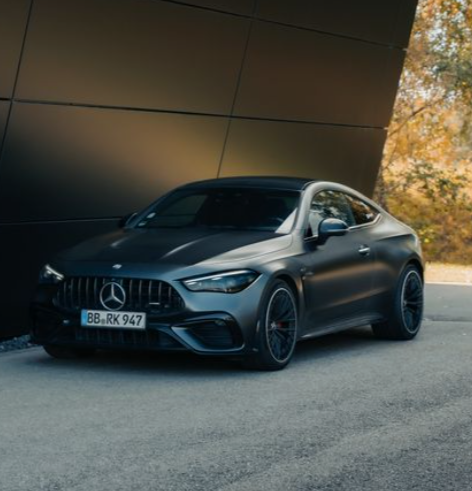
Designed by Fabrizio Giugiaro for Italdesign and presented at the 1997 Geneva Motor Show, the Alfa Romeo Scighera represented a functional prototype built for extreme real-world performance.
The vehicle featured an aluminium spaceframe structure reinforced with carbon-fiber composite materials. Power originated from Alfa’s iconic 3.0-liter Busso V6 engine mounted amidships, fitted with twin turbochargers and dual intercoolers to produce over 400 horsepower.
┌──────────────────────────────────────────────┐
│ ALFA ROMEO SCIGHERA │
├──────────────────────────────────────────────┤
│ • Engine: 3.0L Twin-Turbo Busso V6 │
│ • Output: 400+ hp @ 6,200 RPM │
│ • Transmission: 6-Speed Sequential Manual │
│ • Drivetrain: Permanent All-Wheel Drive │
│ • Top Speed: 187 mph | 0-62 mph: 3.8s │
└──────────────────────────────────────────────┘
The engine transmitted power through a six-speed sequential manual transmission connected to an advanced all-wheel-drive system borrowed from the Alfa Romeo 155 Q4. The Scighera featured a unique two-stage wing-hinged engine canopy and integrated glass top panels that converted the car from a coupé to a targa layout.
Italdesign presented a comprehensive manufacturing and homologation strategy to build a limited batch for track use and endurance racing. However, financial constraints at Fiat Auto halted the project, stranding one of the most mechanically distinctive Italian supercars of the decade.
Yamaha OX99-11: An Unfiltered Formula 1 Car for the Road
Perhaps the most uncompromising vehicle on this list, the Yamaha OX99-11 came remarkably close to low-volume production. In the early 1990s, Yamaha was supplying naturally aspirated 3.5-liter V12 engines (the OX99) to Formula 1 teams like Jordan and Brabham. Seeking to translate this open-wheel powertrain expertise directly to the street, Yamaha partnered with IAD (International Automotive Design) in the UK to build a road-going supercar.
┌─────────────────────────────────────────────────────────────┐
│ YAMAHA OX99-11 ARCHITECTURE │
├─────────────────────────────────────────────────────────────┤
│ • 3.5-Liter Naturally Aspirated F1 V12 Engine │
│ • Redline: 10,000 RPM (Detuned to 400 hp for longevity) │
│ • Structural Carbon-Fiber Tub Chassis │
│ • Central Tandem Seating (Driver front, passenger behind) │
│ • Curb Weight: 2,205 lbs (1,000 kg) │
└─────────────────────────────────────────────────────────────┘
The OX99-11 was designed around a pure carbon-fiber tub chassis with the 3.5-liter V12 bolted directly to the rear bulkhead as a fully stressed structural member. The engine was detuned from F1 racing specs to generate 400 horsepower at an incredible 10,000 RPM, paired with a six-speed manual gearbox.
[F1-Derived 3.5L V12 Engine]
│
▼
[Structural Carbon Fiber Tub]
│
▼
[Centerline Tandem Seating Layout]
│
▼
[Unmatched Power-to-Weight Ratio: 2,205 lbs]
To optimize aerodynamic efficiency and maintain a ultra-narrow frontal area, the vehicle utilized tandem seating—placing the passenger directly behind the driver along the centerline, just like a fighter jet. With a curb weight of just 2,205 lbs (1,000 kg), performance was startling: 0–60 mph took 3.1 seconds, with a top speed exceeding 215 mph.
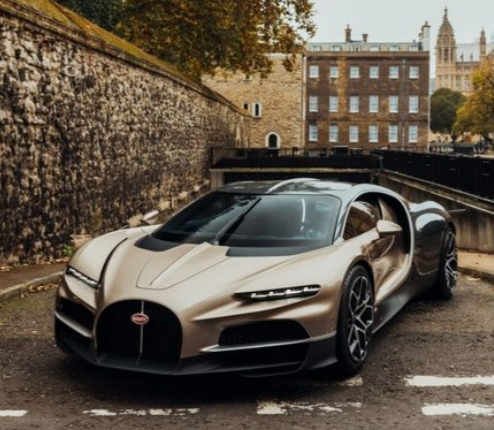
Yamaha built three fully functional prototypes before Japan’s financial recession hit in 1994. Facing a projected retail price of $800,000 (equivalent to over $1.6 million today), corporate leadership canceled the production line. All three original prototypes survive today as historic testaments to Yamaha’s wild engineering ambitions.
The Legacy of 90s Prototype Engineering
The 1990s represented a unique moment in exotic car development. Free from rigid modern digital controls, safety overhangs, and heavy battery packs, engineering teams relied on lightweight materials, raw displacement, high-revving cylinder counts, and manual gearboxes.
┌─────────────────────────────────────────────────────────────┐
│ CONCEPT TO PRODUCTION LEGACY │
├───────────────────────┬─────────────────────────────────────┤
│ CONCEPT PLATFORM │ MASS PRODUCTION IMPACT │
├───────────────────────┼─────────────────────────────────────┤
│ Ford GT90 │ New Edge Design & 2005 Ford GT │
│ Bentley Hunaudières │ Bugatti Veyron W16 Architecture │
│ Volkswagen W12 │ Continental GT / A8 / Touareg W12 │
│ Audi Avus Quattro │ Audi Space Frame (ASF) / A8 Lineup │
│ Lamborghini Calà │ Gallardo V10 Supercar Family │
│ Mercedes-Benz C112 │ Active Body Control & SLR Aero │
└───────────────────────┴─────────────────────────────────────┘
Though these nine concepts never reached dealership floors, they served as the mechanical blueprints for the hypercars that followed. The engineering lessons drawn from these forgotten platforms—ranging from carbon monocoque fabrication to W16 engine dynamics—directly shaped the modern automotive landscape.
Join the Collector Conversation
Which of these nine legendary 1990s concept supercars do you wish had reached full assembly-line production? Would you choose the high-rpm F1 engine sound of the Yamaha OX99-11, or the quad-turbo V12 power of the Ford GT90?
Share your thoughts in the comments below, or subscribe to our historical automotive newsletter for in-depth technical deep dives and market analysis on classic sports cars and exotic platforms.