


The 20 Best V10 Production Cars Ever Built: A Definitive Ranking
Having spent a decade working in automotive engineering and driving the finest performance machinery across North America and Europe, I can tell you that nothing in the automotive world rivals the sheer mechanical violence and emotional resonance of a ten-cylinder engine.
While V8s deliver muscle-car torque and V12s offer buttery sophistication, the V10 occupies a ferocious middle ground—born directly from Formula 1’s golden era. However, with emissions regulations tightening and hybrid powertrains dominating supercar development, these atmospheric high-revving masterpieces are an endangered species.
From ultra-rare Japanese exotics to twin-turbo station wagons and raw American muscle, these are the 20 best V10 production cars ever built.
Lexus LFA
The Lexus LFA represents the absolute pinnacle of Japanese automotive engineering. Developing a bespoke supercar from scratch took Lexus a decade, but the final product defied expectations. Beneath its sculpted carbon-fiber bonnet sits the 1LR-GUE, a 4.8-liter 72-degree naturally aspirated V10 co-developed with Yamaha’s acoustics division.
Producing 552 horsepower and screaming to a staggering 9,000 RPM redline, the LFA engine revs so rapidly—from idle to redline in just 0.6 seconds—that Lexus was forced to install a digital tachometer because analog needles simply could not keep up. The resulting exhaust note sounds like an F1 car from the late 1990s, cementing its place as one of the best V10 production cars ever assembled.
| Feature | Specs |
| :— | :— |
| Engine | 4.8L Naturally Aspirated V10 |
| Power Output | 552 hp @ 8,700 RPM |
| Drivetrain | Front-Mid Engine, Rear-Wheel Drive |
| Collector Market | Highly sought-after, exceeding $800,000+ |
Audi R8 (Mk1 / Type 42)
When Audi introduced the mid-engine R8 for 2007, it fundamentally shifted expectations for modern supercar usability. While the early models featured a 4.2-liter V8, the inclusion of the 5.2-liter FSI naturally aspirated V10 in 2009 transformed the vehicle into a legitimate exotic killer.
Sharing architectural DNA with the Lamborghini Gallardo, the Type 42 R8 V10 produced up to 562 horsepower in ultra-exclusive special editions like the R8 LMX. More importantly for driving purists, Audi paired this high-revving powerhouse with an open-gated 6-speed manual transmission alongside the Quattro all-wheel-drive system.
Audi R8 (Mk2 / Type 4S)
For the second generation, Audi doubled down on performance while bidding farewell to manual transmissions. Arriving with a sharper aluminum-spaceframe construction, the Type 4S squeezed even more performance out of the 5.2-liter V10, offering outputs ranging from 532 hp to 612 hp in the R8 V10 Performance.
Audi also expanded the lineup to include rear-wheel-drive models, providing an unadulterated driving dynamic. The curtain closed on mid-engine Audi supercars with the hardcore, limited-production R8 GT RWD, leaving a legacy of everyday exotic usability.
Lamborghini Gallardo
The Gallardo was the car that fundamentally saved Lamborghini’s financial trajectory, selling over 14,000 units during its ten-year production run. Under Audi’s parentage, Lamborghini combined raw Italian flair with modern German manufacturing standards.
Available with either a 5.0-liter or 5.2-liter naturally aspirated V10, the Gallardo spanned dozens of iterations, from raw gated-manual rear-wheel-drive editions (LP550-2 Valentino Balboni) to extreme lightweight track tools like the Superleggera.
Lamborghini Sesto Elemento
The Sesto Elemento (“Sixth Element”) took extreme engineering principles to an unprecedented level. Based on the LP570-4 Gallardo, this track-only masterpiece weighed a mere 2,202 lbs (999 kg) thanks to extensive carbon-fiber construction.
Power Output: 562 hp @ 8,000 RPM
Weight-to-Power Ratio: 3.88 lbs per horsepower
Production Run: 20 units globally
Original Price: $2.2 Million
Powered by a howling 5.2-liter V10, the Sesto Elemento accelerated from 0 to 60 mph in a blistering 2.5 seconds, delivering a visceral driving experience unlike anything else on track.
Lamborghini Huracán
Replacing the Gallardo was no easy feat, yet the Huracán exceeded expectations throughout its decade-long lifecycle. Powered by an evolved 5.2-liter atmospheric V10, output ranged from 572 hp in rear-wheel-drive models to 631 hp in track-focused variants.
The Huracán spawned remarkable iterations, including the downforce-heavy STO, the balanced Tecnica, and the terrain-conquering Huracán Sterrato, proving that a naturally aspirated V10 can excel across diverse environments.
Volkswagen Touareg V10 TDI
The early 2000s saw Volkswagen’s engineering division push technical limits without constraint, yielding the extraordinary Touareg V10 TDI. Powered by a massive 4.9-liter twin-turbocharged diesel V10, this full-size SUV delivered unbelievable pulling power.
In top-spec R50 trim, the engine pushed out 345 hp and 627 lb-ft of torque, granting this 5,800-lb haul machine the ability to pull a Boeing 747 airliner during a famous demonstration.
Volkswagen Phaeton V10 TDI
Engineered under the direct vision of Ferdinand Piëch, the Phaeton was designed to compete with the world’s finest luxury sedans. While most markets received V8 and W12 gas engines, select regions saw the installation of the monstrous 5.0-liter V10 twin-turbodiesel.
Combining continuous high-speed Autobahn capability with silent, effortless torque, the Phaeton V10 TDI remains one of the most intriguing high-end sleeper sedans ever built.
Dodge Viper
When Chrysler executive Bob Lutz greenlit the original Dodge Viper in the late 1980s, the goal was simple: create a modern, unfiltered successor to the Shelby Cobra. The heart of the car was an 8.0-liter all-aluminum V10 engine engineered with assistance from Lamborghini (then owned by Chrysler).
Evolution of the Viper across five generations:
Gen 1 (1992-1995): 8.0L V10 | 400 hp | Raw roadster layout
Gen 3/4 (2003-2010): 8.3L / 8.4L V10 | 500–600 hp | Refined chassis dynamics
Gen 5 ACR (2015-2017): 8.4L V10 | 645 hp | Massive aero downforce, set multiple track records
Bristol Fighter
This British gullwing coupe paired low-volume craftsmanship with American muscle. Underneath its aerodynamic body, the Bristol Fighter utilized a tuned version of the Dodge Viper’s 8.0-liter V10, generating 525 horsepower in base trim.

Extremely rare, with roughly 13 units produced, the Fighter provided effortless high-speed touring wrapped in an unconventional package.
Alfa Romeo TZ3 Stradale
Built to celebrate Alfa Romeo’s centenary in 2010, the Zagato-designed TZ3 Stradale blended Italian coachbuilding with brute American performance. Beneath its custom carbon-fiber bodywork sat the tubular frame, 8.4-liter V10 engine, and 6-speed manual transmission of a Dodge Viper ACR.
Generating 640 horsepower sent straight to the rear wheels, only 9 units were produced globally, making it a rare collector vehicle.
Engler Desat
Billed as a “superquad,” the Engler Desat is a vehicle concept created by Viktor Engler. Packing supercar performance into an exposed seating arrangement, the Desat utilizes the same 5.2-liter mid-mounted V10 engine found in the Audi R8 and Lamborghini Huracán.
In naturally aspirated trim, it pushes out 612 hp; twin-turbocharged variants claim over 1,000 horsepower, pushing this doorless, roofless vehicle beyond 200 mph.
McLaren Solus GT
Originating as a digital concept car in the Gran Turismo video game series, McLaren brought the single-seat track machine to life with a limited production run of 25 units.
Unlike McLaren’s road cars that utilize twin-turbo V8 engines, the Solus GT relies on a motorsport-derived 5.2-liter naturally aspirated Judd V10. Revving to 10,000 RPM, it delivers 828 horsepower (plus additional power via a high-speed ram-air intake) in a chassis weighing under 2,200 lbs.
BMW M5 (E60)
During the early 2000s, BMW’s involvement in Formula 1 led directly to the creation of the S85B50 engine—a high-revving 5.0-liter naturally aspirated V10 installed in the E60 M5 sports sedan.
| Performance Metrics | Details |
| :— | :— |
| Engine Architecture | 5.0L 90-Degree V10 (S85) |
| Peak Power | 500 hp @ 7,750 RPM |
| Redline | 8,250 RPM |
| Transmission Options | 7-Speed SMG III or 6-Speed Manual (US Market) |
The S85 engine featured individual throttle bodies and dry-sump lubrication, delivering an exotic exhaust note unmatched by modern turbocharged performance sedans.
BMW M6 (E63 / E64)
For buyers seeking the F1-derived S85 V10 engine in a grand touring layout, BMW offered the E63 Coupe and E64 Convertible M6. Featuring the same 500-hp output as the M5 sedan, dropping the top on the E64 convertible allowed drivers to enjoy the screaming 8,250 RPM redline uninterrupted.
Wiesmann Roadster MF5
German boutique automaker Wiesmann specialized in fitting modern BMW M powertrains into retro fiberglass-and-aluminum sports cars. The apex of their lineup was the MF5, which housed the high-revving BMW S85 V10 engine.
Delivering 500 horsepower in a lightweight, driver-focused chassis, the MF5 combined classic proportions with high-revving performance.
Veritas RSIII
Inspired by classic 1950s Veritas racing cars, the RSIII featured single-seat open-cockpit styling with carbon-Kevlar body panels. Positioned far back in the front-mid chassis for balance sat the BMW-sourced 5.0-liter S85 V10, making 500 horsepower in an unfiltered package.
Audi RS6 Avant (C6)
While BMW went naturally aspirated for its high-revving V10, Audi took a different path for the C6-generation RS6. Audi modified a 5.0-liter V10 engine and equipped it with two massive turbochargers.
Output: 572 hp and 479 lb-ft of torque
Drivetrain: Rear-biased Quattro AWD
Layout: Available as both a Sedan and Avant (Wagon)
The result was an all-weather super-wagon capable of effortlessly reaching triple-digit highway speeds.
Audi S8 (D3)
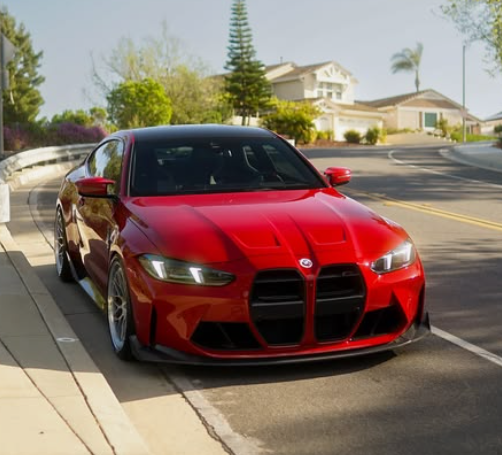
For drivers seeking V10 performance in a luxury luxury sedan, the D3-generation Audi S8 delivered. Powered by a naturally aspirated 5.2-liter FSI V10 tuned for executive touring, the S8 developed 444 hp and 398 lb-ft of torque. Combined with an aluminum spaceframe and Quattro traction, it offered understated performance.
Porsche Carrera GT
Widely praised by automotive journalists and collectors as one of the greatest driver’s cars ever made, the Porsche Carrera GT sits at the summit of ten-cylinder royalty.
Originally designed for a canceled Le Mans prototype racing program, the M80/01 engine is a 5.7-liter dry-sump naturally aspirated V10.
Max Power: 604 hp @ 8,400 RPM
Transmission: Traditional 6-Speed Manual with a beechwood shift knob
Clutch Type: Dual-plate Dry Ceramic Clutch (PCCD)
Chassis: Full Carbon Fiber Monocoque
With its intense power delivery, howling exhaust note, and unassisted analog driving dynamics, the Carrera GT represents the golden era of supercars.
Navigating the Legacy of V10 Automobiles
As manufacturers transition toward forced induction, electrification, and modern hybrid setups, the era of raw ten-cylinder engines has largely drawn to a close. Today, acquiring and maintaining these iconic engines requires deep technical insight and specialized service support.
Whether you are evaluating a high-revving exotic like the Lexus LFA, searching for a gated-manual Audi R8, or seeking expert collector car guidance, staying connected with experienced industry specialists ensures your investments remain properly cared for.
Contact our automotive advisory team today to discover premium inventory options, expert valuation services, and dedicated maintenance strategies tailored for high-performance exotics.